
Section 1
Why outriggers matter
Stabilizers can increase the effective supporting footprint of a mobile tower, but their required type, geometry and installation depend on the specific system and conditions. A general ratio is not an approval for any particular configuration.
Section 2
Inspect the surface and supporting conditions
Before assembly or movement, evaluate ground bearing, slope, holes, debris, overhead hazards and obstructions. OSHA requires mobile scaffolds to be plumb, level, square and appropriately braced.
Section 3
Check the actual components
Inspect outrigger tubes, clamps, pins, feet and contact with the supporting surface. Follow the approved manufacturer configuration rather than mixing stabilizers or braces from different systems.
Section 4
Lock casters and reassess after moving
OSHA requires positive caster or wheel locks when mobile scaffolds are used in a stationary manner. Moving a scaffold changes the hazard assessment; verify level, bracing, stabilization and locks before work resumes.
Section 5
Wind and electrical hazards
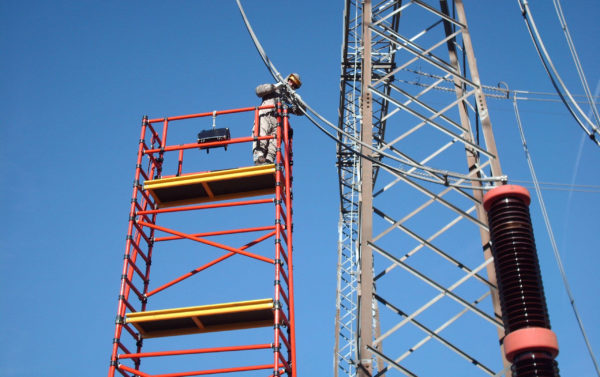
Wind between buildings and around open structures can affect stability. Fiberglass is not permission to approach energized lines. Apply the current system instructions, weather restrictions and electrical clearance rules.
Section 6
Request a system-specific configuration
Tell us the tower model, platform height, footprint, indoor or outdoor environment, intended load and ground conditions so the correct components and documentation can be reviewed.
Primary references
Official sources and further reading
Use the links below to review the original source and confirm the current requirement, revision and applicability.