Smooth indoor floors
Wheel material, diameter and brakes should suit the floor and relocation frequency.

Mobile scaffold base components
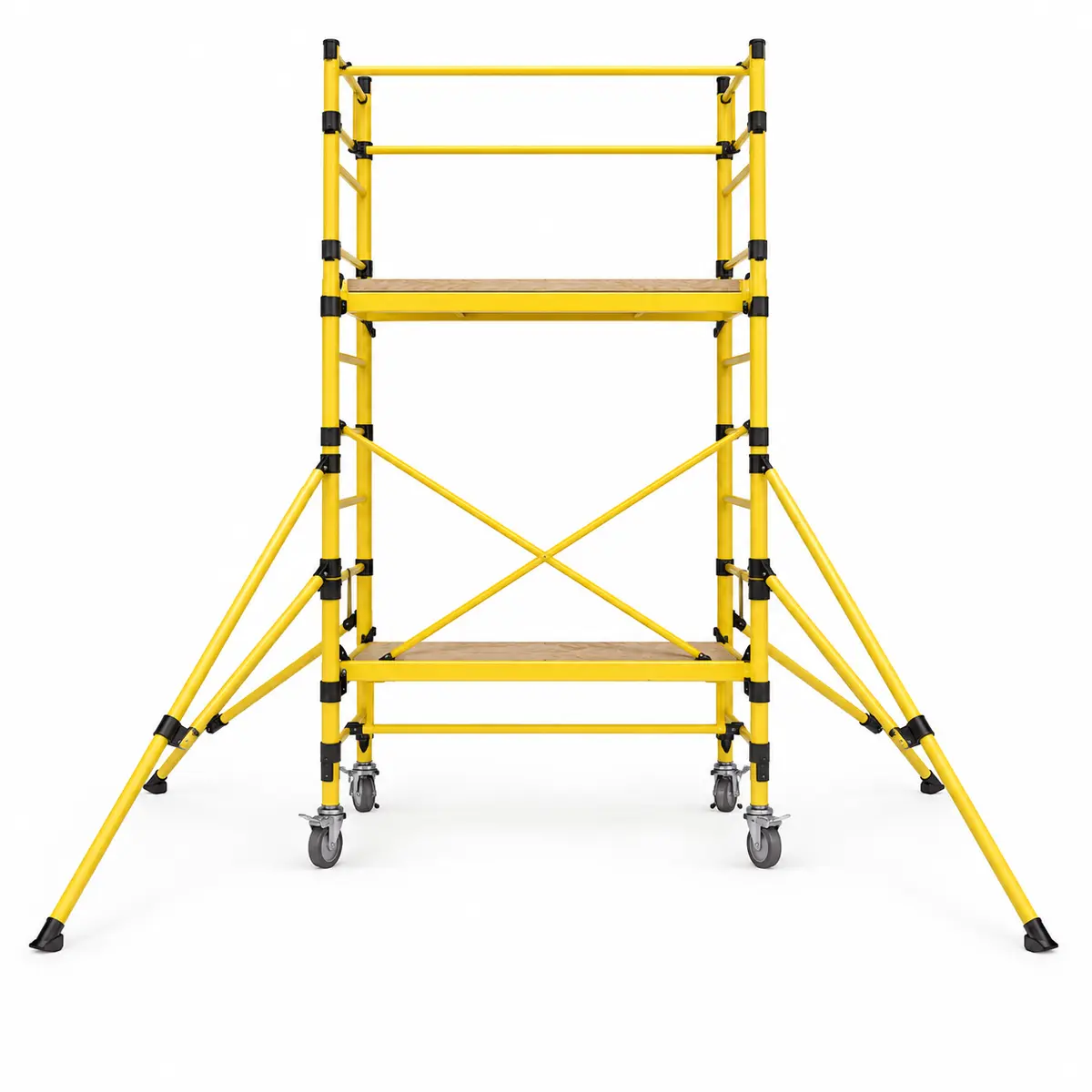
Identify compatible scaffold casters and base components using wheel size, stem or socket details, brake type, floor condition and the exact fiberglass scaffold system.
Application overview
Mobile fiberglass scaffold casters must fit the exact base or frame connection and be appropriate for the surface, load, wheel diameter, brake arrangement and approved tower configuration. A wheel that fits the socket is not automatically the correct scaffold caster.
Where it fits
Real-world starting points for discussing the work, footprint and environment.
Wheel material, diameter and brakes should suit the floor and relocation frequency.
Small wheels may interact poorly with gaps, transitions or debris; document the full movement route.
Match stem or socket dimensions, wheel diameter, brake type and original system.
Do not assume standard casters are appropriate for gravel, slope or irregular ground.
Selection guidance
Provide the stem or socket size, wheel diameter and width, brake arrangement, swivel details and photos of the existing base connection. Surface information is essential because caster selection is part of the complete mobility plan.
Discuss Your Requirements01—05
Information to include
A better specification process
Documenting the work before choosing components reduces assumptions and helps compare practical options.
Document the existing caster, frame connection and any adjusters or base parts.
Record wheel and mounting dimensions with clear photographs.
Match the caster to the approved system and actual floor or route conditions.
Verified component references
Use these codes as identification references only. Final compatibility, quantity and complete-system suitability are confirmed during quoting.
Continue your research
Move between product, application and technical pages without losing the context of the current decision.
Page-specific answers
Clear answers help teams evaluate fit, collect the right project details and begin a productive conversation.
Ask a QuestionNo. Connection geometry, load requirements, wheel size and the approved scaffold system must be verified.
Only when the manufacturer permits the resulting complete configuration. A different wheel can change geometry and system behavior.
Brake requirements depend on the system and use instructions. Confirm the exact supplied caster package.
Do not assume so. Describe the actual surface and route so the base and mobility approach can be evaluated.
Need the right configuration?
Share the application, footprint, environment and access requirements. We’ll help identify a practical next step.
Specialized companies. One access network.