Section 1
Non-conductive material is one control—not the safety program
Fiberglass structural members are considered because they do not conduct electricity like common metals under normal clean and dry conditions. That difference can be valuable in electrically sensitive environments, but it does not establish an approach boundary, verify de-energization or protect a worker from every electrical path.
The employer’s electrical safety program governs the work. Product selection supports that program and should never be used to bypass it.
Section 2
Power-line clearance still applies
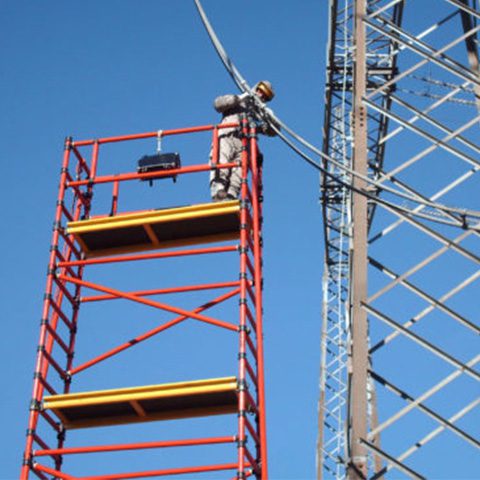
OSHA scaffold provisions contain specific requirements for the distance between scaffolds and exposed energized power lines. The required clearance depends on voltage and whether the line is insulated, and work closer than the specified distance requires the conditions described in the regulation.
Measure the complete operating envelope: frames, rails, platforms, workers, tools and materials. Also evaluate the path used to move the scaffold, since a safe final position does not make the travel route safe.
Section 3
Electrical rooms create more than one constraint
Switchgear rooms and industrial electrical spaces can combine approach boundaries, limited aisles, door restrictions, overhead raceways, egress requirements and controlled access. A narrow fiberglass tower may fit the aisle but still conflict with doors, panels or required working clearances.
Document the voltage environment, energized status, controlled boundaries, platform position and travel route before choosing tower width or height.
Section 4
Cleanliness and condition deserve a written process
Dirt, moisture, overspray, conductive residue and physical damage can undermine assumptions about equipment condition. Inspection should include structural members, connections, platforms, casters and all components—not only the fiberglass tubes.
Follow manufacturer-approved cleaning methods. If exposure or damage creates doubt, remove the component from service and obtain qualified guidance.
Section 5
Use careful language in purchasing and training
Terms such as “shockproof,” “electrically certified” or “safe around live power” can create dangerous overconfidence unless supported for a specific product, condition and standard. Better language describes the non-conductive material property and immediately states the limits.
The quote and training should reinforce that material selection does not replace de-energization, clearances, PPE, barricades, grounding decisions or qualified electrical supervision.
Primary references
Official sources and further reading
Use the links below to review the original source and confirm the current requirement, revision and applicability.