Heavy industrial work
Steel systems are common where rugged service, established component ecosystems and conventional industrial access dominate the decision.

Compare fiberglass and steel for industrial access
Compare fiberglass vs steel scaffold for conductivity, corrosion, handling, durability and industrial application fit.
Application overview
Steel scaffold is valued for strength, durability and broad familiarity across construction and industrial work. Fiberglass is selected when electrically non-conductive material properties, corrosion concerns or specialized facility requirements change the decision. A meaningful comparison must consider the entire access system, not only frame material.
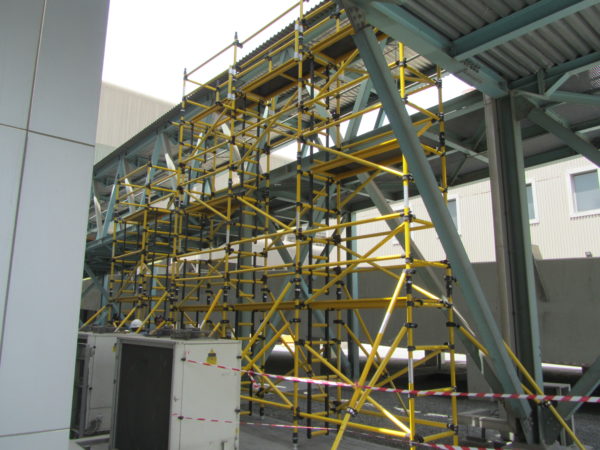
Where it fits
Real-world starting points for discussing the work, footprint and environment.
Steel systems are common where rugged service, established component ecosystems and conventional industrial access dominate the decision.
Fiberglass may be considered where conductive metal introduces an additional concern, subject to all required electrical controls.
Fiberglass can be attractive where moisture, chemicals or coastal exposure make material corrosion a significant planning issue.
Handling requirements, caster design, component weight and route conditions should be compared for the complete tower.
Selection guidance
Steel can offer a durable, familiar platform for many jobs, while fiberglass can provide important material advantages in specialized environments. The better choice depends on actual exposure, electrical conditions, transport needs, geometry and system availability.
Discuss Your Requirements01—05
Information to include
A better specification process
Documenting the work before choosing components reduces assumptions and helps compare practical options.
Describe the work, hazards, environment and route.
Review frames, platforms, access, rails, casters and stabilizers together.
Use manufacturer information and site review to select the system appropriate for the real task.
Continue your research
Move between product, application and technical pages without losing the context of the current decision.
Page-specific answers
Clear answers help teams evaluate fit, collect the right project details and begin a productive conversation.
Ask a QuestionStrength and capacity depend on the engineered product and complete configuration. Material names alone do not establish allowable load or height.
Fiberglass structural members resist many corrosive conditions, but compatibility varies by resin, chemical, concentration and temperature. Hardware and other components must also be evaluated.
Steel is common in heavy industrial scaffolding, but suitability and capacity depend on the exact system. Compare the approved configuration and task requirements rather than relying on a material stereotype.
Handling depends on component weight, tower size, caster design, route, surface and crew procedure. Compare the exact systems under consideration.
Need the right configuration?
Share the application, footprint, environment and access requirements. We’ll help identify a practical next step.
Specialized companies. One access network.