Electrical rooms
Use compact or modular fiberglass access where conductive metal equipment may be undesirable, while preserving all required electrical clearances and work controls.
Material selection for electrically sensitive environments
Non-conductive fiberglass scaffold for electrical, utility and industrial access planning, with clear guidance on system selection and electrical safety boundaries.
Application overview
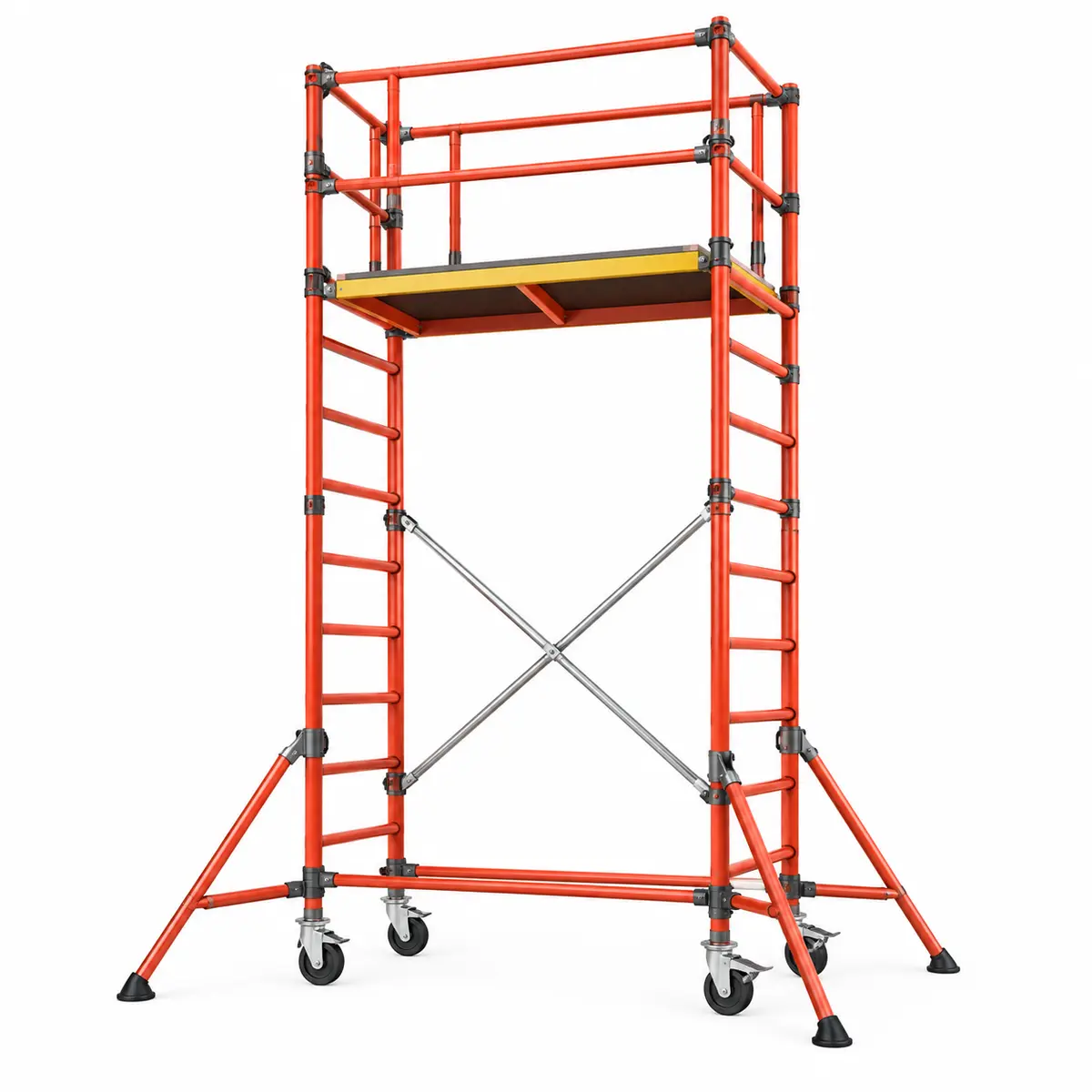
Fiberglass scaffold is often selected for electrically sensitive environments because fiberglass structural members do not conduct electricity like common metals under normal clean and dry conditions. That material property can reduce one source of conductive exposure, but it does not make a scaffold an electrical protective device and does not eliminate shock, arc-flash, approach-boundary, grounding, contamination or energized-work hazards.
Where it fits
Real-world starting points for discussing the work, footprint and environment.
Use compact or modular fiberglass access where conductive metal equipment may be undesirable, while preserving all required electrical clearances and work controls.
Plan the full tower, worker, tool and movement envelope around energized equipment, outdoor surfaces and facility procedures.
Evaluate fiberglass when electrical infrastructure, corrosive exposure or sensitive equipment influences material choice.
Coordinate platform position, access and equipment cleanliness with the employer’s electrical safety program and manufacturer instructions.
Selection guidance
The term non-conductive describes a material characteristic—not permission to work closer to energized parts. A useful selection process starts with the electrical condition, required approach distance, platform position, route, surface and complete system configuration.
Discuss Your Requirements01—05
Information to include
A better specification process
Documenting the work before choosing components reduces assumptions and helps compare practical options.
Document energized conditions, clearances, contamination and the governing electrical safety program.
Compare narrow, double-width, modular or custom fiberglass configurations around the work position and route.
Verify compatible platforms, guardrails, access components, casters, stabilizers and manufacturer instructions before use.
Continue your research
Move between product, application and technical pages without losing the context of the current decision.
Page-specific answers
Clear answers help teams evaluate fit, collect the right project details and begin a productive conversation.
Ask a QuestionNo. Fiberglass has non-conductive material properties, but electrical safety still depends on de-energization where required, approach boundaries, PPE, work practices, site controls and the condition of the equipment.
No. Material selection does not change regulatory or employer-required electrical clearances. The complete operating envelope must remain within approved limits.
Yes. Moisture, conductive dust, chemicals, damage and improper cleaning can affect condition and must be addressed through inspection, maintenance and site procedures.
It depends on footprint, platform height, route, work position, surface and required complete-system components. Narrow towers often suit restricted rooms; wider or modular towers may better support larger tasks.
Need the right configuration?
Share the application, footprint, environment and access requirements. We’ll help identify a practical next step.
Specialized companies. One access network.