Aircraft maintenance & MRO
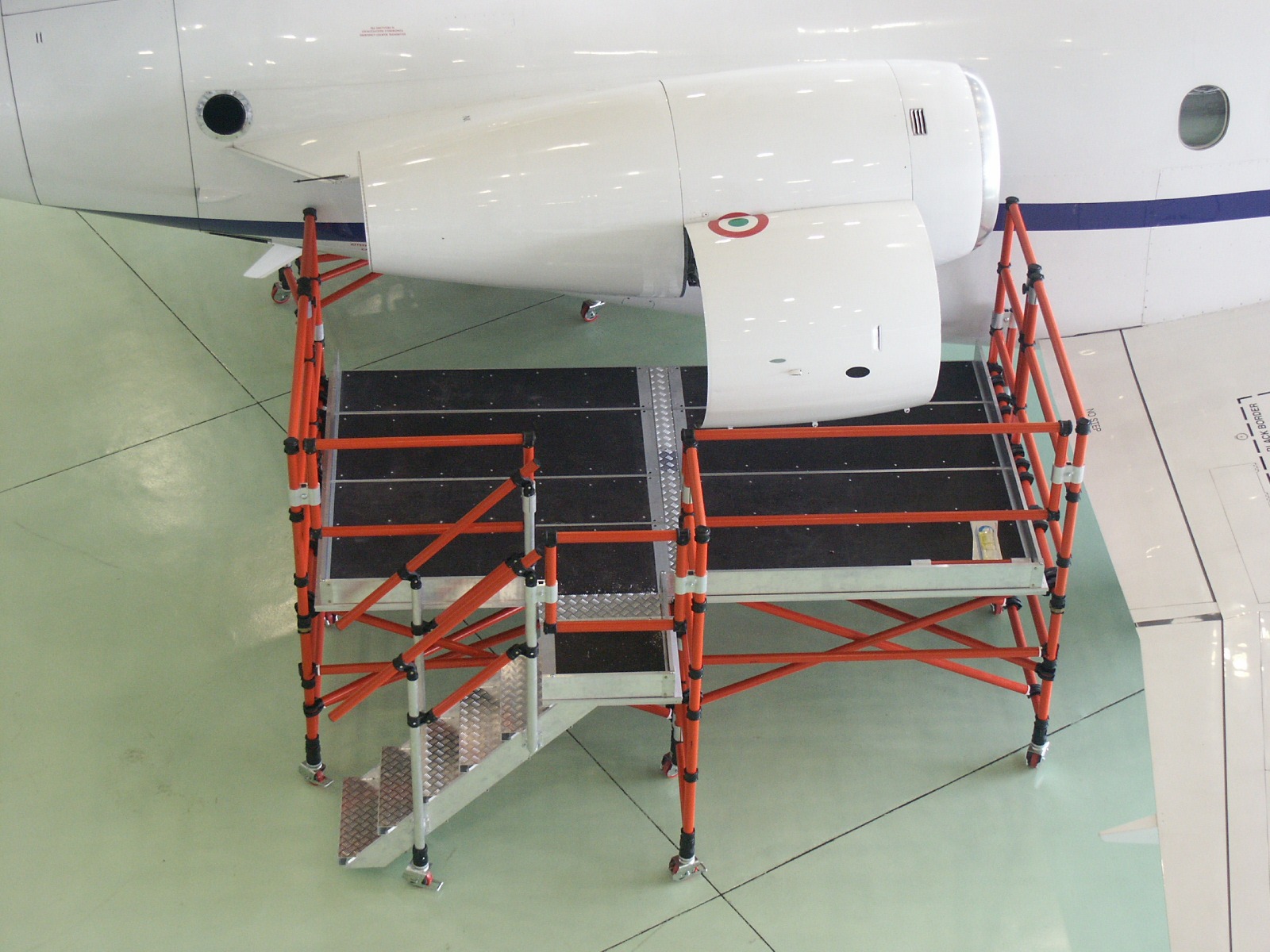
Position technicians around fuselage, wings, engines, empennage and service points for inspection, maintenance, repair and overhaul.
Aircraft maintenance, inspection & MRO
Configurable fiberglass access platforms and scaffold systems for aircraft maintenance, inspection, repair, overhaul, engine access, fuselage work, wing service and tail access.
Application overview
Aircraft owners, MRO teams, maintenance organizations and manufacturers need accurate technician positioning around damage-sensitive aircraft structures. Fiberglass scaffold and work-platform systems can support inspection, maintenance, repair and overhaul around engines, fuselage sections, wings, empennage, service points and other aircraft work zones where configurable geometry and material properties matter.
Where it fits
Real-world starting points for discussing the work, footprint and environment.
Position technicians around fuselage, wings, engines, empennage and service points for inspection, maintenance, repair and overhaul.
Reach defined aircraft work zones while maintaining planned stand-off and no-contact areas.
Position technicians for inspection and service around engine, nacelle and adjacent aircraft work zones.
Plan platform height, reach and stand-off around fuselage surfaces, wing areas, empennage and elevated service points.
Make a better decision
Aircraft maintenance platforms should position technicians for inspection, service and MRO while keeping structural members, rails, casters and tools outside the aircraft no-contact envelope. The best platform position supports the task without creating a new surface-damage or foreign-object risk.
Use plan and elevation references to document the minimum stand-off around sensitive surfaces.
Hangar coatings, embedded tracks and housekeeping rules may change caster and movement requirements.
Loose hardware, labels, damaged components and platform contents belong in the facility’s foreign-object-control process.
Common specification mistakes
Selection guidance
Provide the aircraft or equipment geometry, desired technician position and minimum stand-off. Rail locations, caster behavior, padding and approach direction should be considered together.
Discuss Your Requirements01—05
Information to include
A better specification process
Documenting the work before choosing components reduces assumptions and helps compare practical options.
Define the worker’s standing surface relative to the task.
Identify no-contact zones, floor rules and foreign-object controls.
Review approach, use, relocation and storage with facility stakeholders.
Continue your research
Move between product, application and technical pages without losing the context of the current decision.
Page-specific answers
Clear answers help teams evaluate fit, collect the right project details and begin a productive conversation.
Ask a QuestionCustom concepts can address aircraft geometry, maintenance zones and technician work positions, subject to measurements, clearance requirements and design review.
Applications can include inspection, maintenance and MRO around engines, fuselage sections, wings, tail areas and service points, subject to aircraft geometry, clearance requirements and configuration review.
No. Surface protection and no-contact controls are separate requirements determined by the aircraft, operator, facility and application.
Potential reuse depends on aircraft geometry, work points, route and approved configuration.
Aircraft or equipment dimensions, plan and elevation views, work-point coordinates, stand-off requirements, floor layout and photographs accelerate review.
Need the right configuration?
Share the application, footprint, environment and access requirements. We’ll help identify a practical next step.
Specialized companies. One access network.