Infrastructure
Plan access around tunnels, treatment assets and public-facility equipment.

Unusual access challenges
Explore fiberglass access for aviation, manufacturing, infrastructure, controlled facilities and one-of-a-kind projects.
Application overview
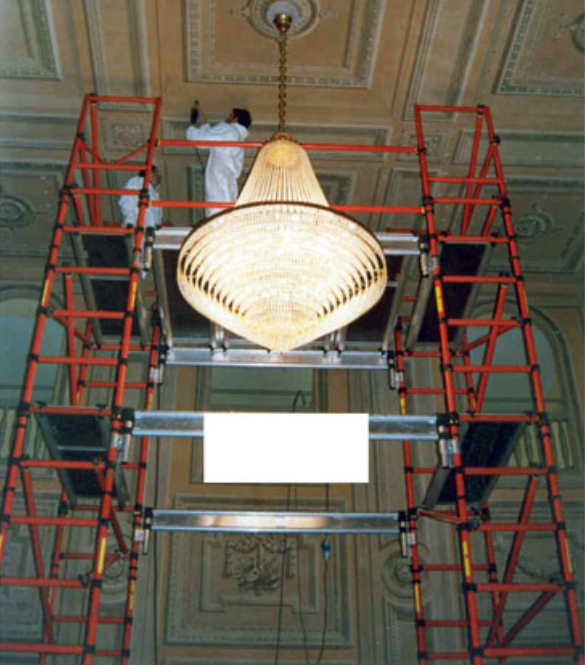
Special applications begin with constraints: unusual geometry, a sensitive asset, a restricted operating window or an environment that changes material requirements. We organize those constraints into an access brief that can be reviewed against standard, modified or custom fiberglass options.
Where it fits
Real-world starting points for discussing the work, footprint and environment.
Plan access around tunnels, treatment assets and public-facility equipment.
Support repeat work near production cells, conveyors and overhead services.
Reach vehicle, rail or marine equipment while managing stand-off and movement.
Define a practical system for an unusual inspection, installation or repair task.
Make a better decision
Special projects move faster when the inquiry separates known facts, assumptions and open decisions. The goal of the first review is not to force a product selection—it is to define the access problem well enough to compare realistic approaches.
Record verified dimensions, work points, environment and immovable obstructions.
Explain what remains energized, moving, occupied or in production during the work.
Define how the team will judge fit, access, mobility, storage and task completion.
Common specification mistakes
Selection guidance
Wide photos show the environment; close photos show interfaces; measurements connect the two. Include what must remain operating, what cannot be touched and how the equipment reaches the work zone.
Discuss Your Requirements01—05
Information to include
A better specification process
Documenting the work before choosing components reduces assumptions and helps compare practical options.
Describe the desired work position and why standard access is difficult.
Evaluate standard, modified and custom configuration approaches.
Confirm assumptions, deliverables, interfaces and acceptance requirements.
Continue your research
Move between product, application and technical pages without losing the context of the current decision.
Page-specific answers
Clear answers help teams evaluate fit, collect the right project details and begin a productive conversation.
Ask a QuestionAny task where geometry, environment, workflow or asset protection prevents a straightforward standard-product selection.
Yes, if photos include reference dimensions and show the full route and work zone. Drawings improve accuracy as the concept develops.
Not necessarily. A standard or modified configuration may work after the constraints are understood.
Clear dimensions, work position, restrictions, environment, quantity and timing allow a productive first review.
Need the right configuration?
Share the application, footprint, environment and access requirements. We’ll help identify a practical next step.
Specialized companies. One access network.