
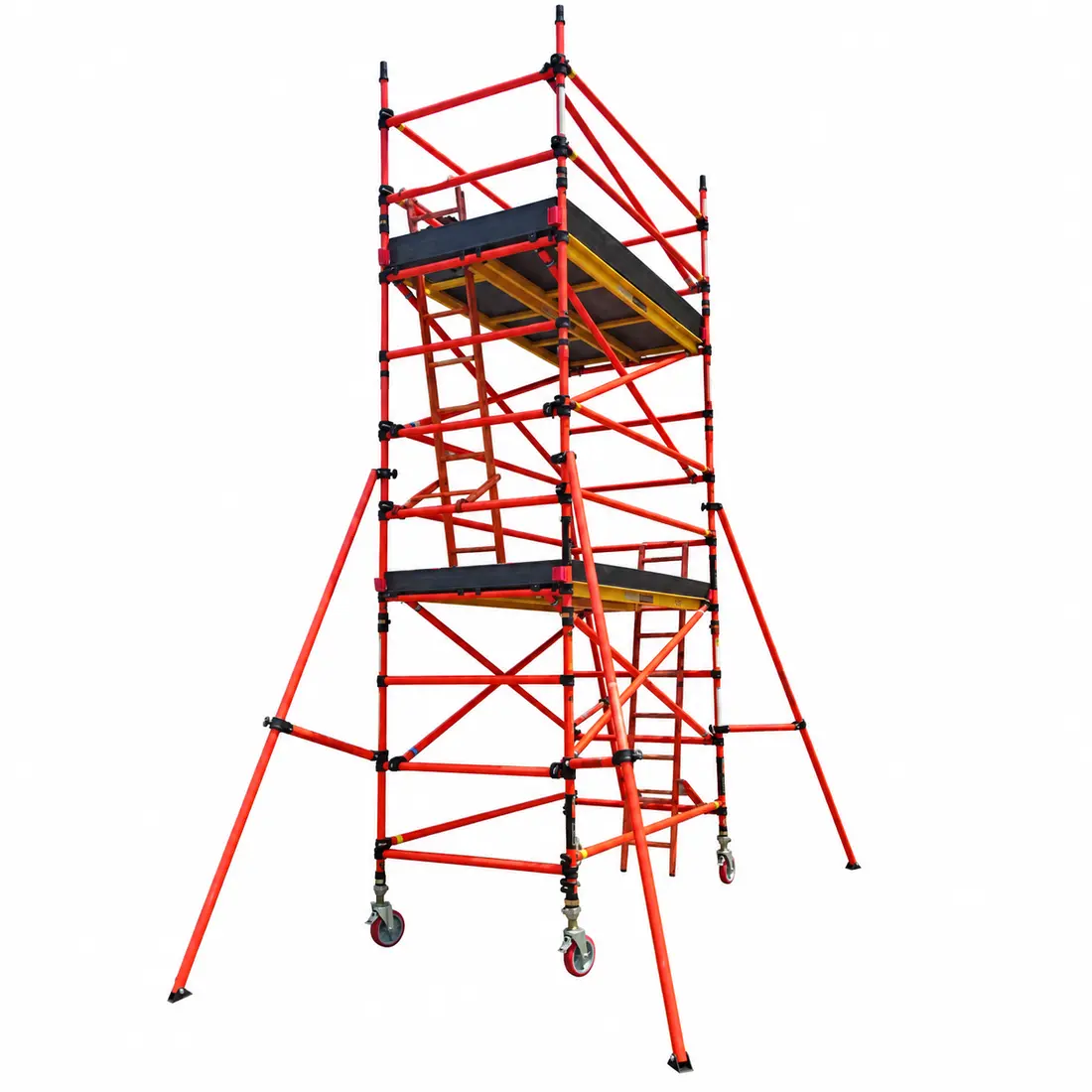
Section 1
Inspection begins with configuration identity
Before evaluating condition, determine what has actually been assembled. Confirm the manufacturer or system family, intended configuration, platform height and the component package. A collection of individually sound parts can still create an unapproved system if they do not belong together.
Keep configuration instructions and component identifiers accessible. If the system has multiple permitted heights, make the required parts for each arrangement clear to the crew.
Section 2
Look from the ground up
Start with the supporting surface and base. Check level, settlement, openings, slopes, caster contact, locks, base plates, screw jacks or stabilizers as applicable. Continue upward through frames, braces, connection devices, platforms, access and perimeter protection.
This sequence helps inspectors avoid focusing on the visible work deck while missing a base or connection problem below it.
Section 3
Evaluate fiberglass condition carefully
Inspect fiberglass members for cracks, splits, crushing, severe abrasion, exposed fibers, heat effects, chemical attack or unauthorized drilling and repair. Also inspect non-fiberglass components such as hardware, platforms, casters and brakes.
Appearance alone does not establish structural acceptability. Follow the manufacturer’s criteria, and isolate questionable components instead of making a field repair.
Section 4
Reassess the environment
Conditions around a scaffold may change even when the tower has not. Look for new electrical exposure, wet or contaminated floors, vehicle traffic, process releases, overhead work, wind, open doors, floor penetrations or changes to the work face.
The inspection should connect the equipment to the current jobsite, not treat it as an isolated object.
Section 5
Document action—not paperwork for its own sake
A useful record identifies the scaffold or location, date or shift, inspector, configuration, findings and corrective actions. Documentation should help prevent a removed component from returning to service and make recurring problems visible.
The employer determines the appropriate record system. A simple controlled form can be effective when it is tied to real authority to stop use and correct hazards.
Primary references
Official sources and further reading
Use the links below to review the original source and confirm the current requirement, revision and applicability.